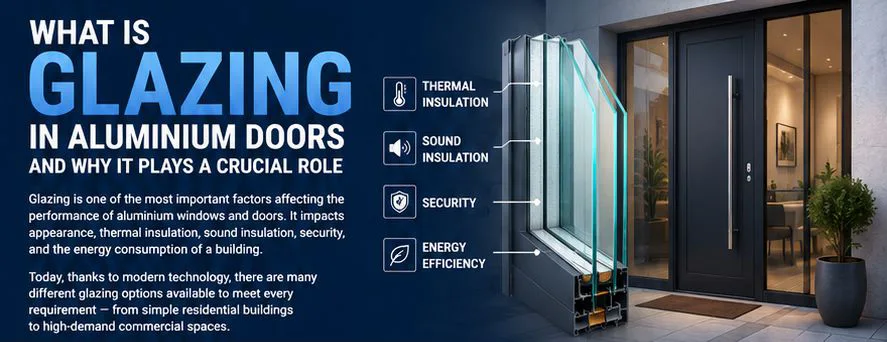
Glazing is one of the most important factors affecting the performance of aluminium windows and doors. It not only impacts appearance, but also determines thermal insulation, sound insulation, security, and the energy consumption of a building.
Today, thanks to modern technology, there are many different glazing options available to meet every requirement — from simple residential buildings to high-demand commercial spaces.
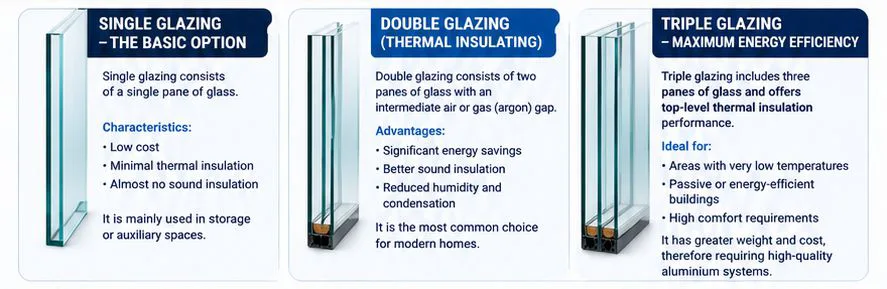
Single Glazing – The Basic Option
Single glazing consists of a single pane of glass.
Although mainly found in older buildings, it is now considered energy inefficient.
Characteristics
- Low cost
- Minimal thermal insulation
- Almost no sound insulation
It is mainly used in storage or auxiliary spaces.
Double Glazing (Thermal Insulating)
Double glazing consists of two panes of glass with an intermediate air or gas (argon) gap.
Advantages
- Significant energy savings
- Better sound insulation
- Reduced humidity and condensation
It is the most common choice for modern homes.
Triple Glazing – Maximum Energy Efficiency
Triple glazing includes three panes of glass and offers top-level thermal insulation performance.
Ideal for
- Areas with very low temperatures
- Passive or energy-efficient buildings
- High comfort requirements
It has greater weight and cost, therefore requiring high-quality aluminium systems.
Laminated Safety Glass
Laminated safety glass consists of two or more glass panes bonded together with a special interlayer (PVB).
How It Works
In case of breakage, the glass does not shatter but remains attached to the membrane.
Recommended Applications
- Ground-floor residences
- Shopfronts
- Balcony doors
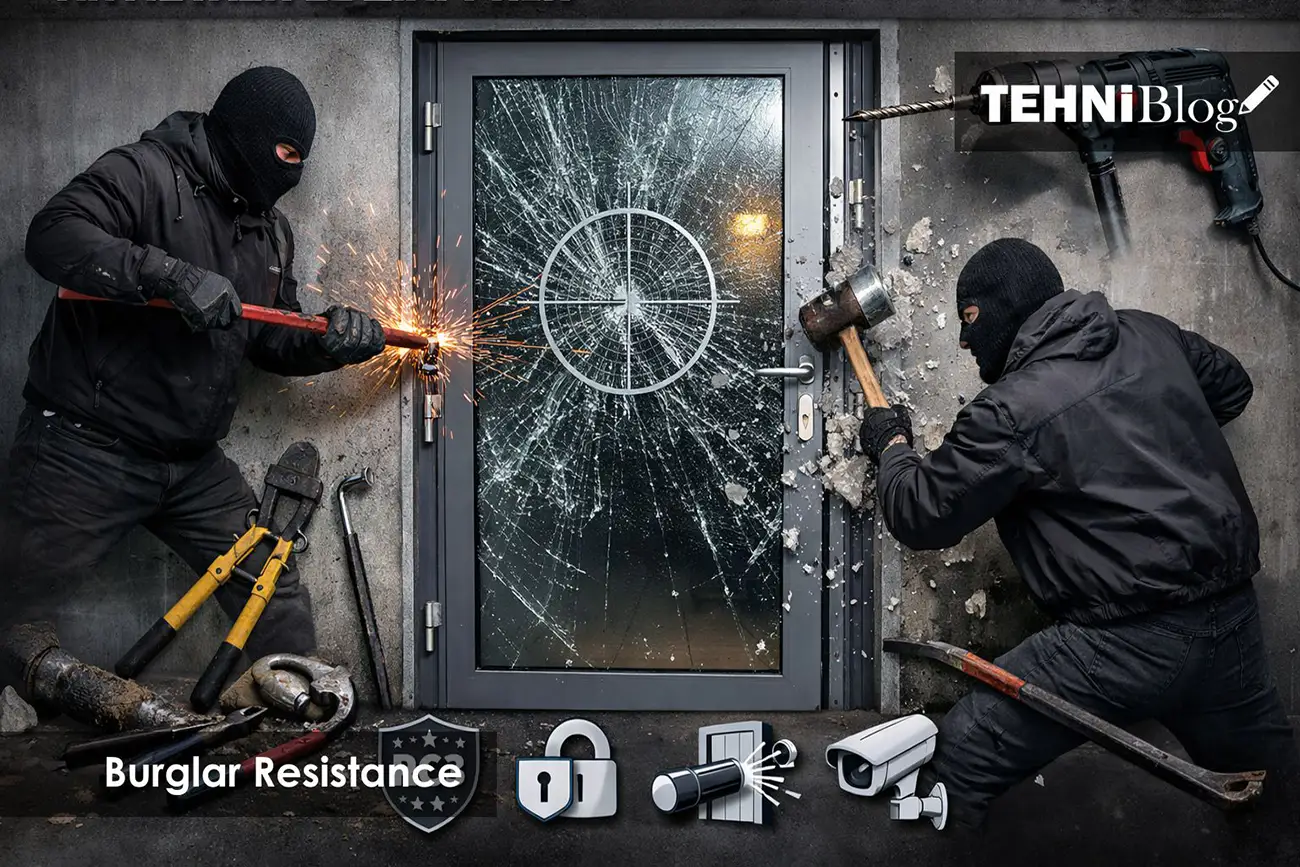
- Areas with increased security requirements
They provide anti-burglary protection and enhanced sound insulation.
Acoustic Glass
Acoustic glass is specifically designed to reduce external noise.
How Sound Insulation is Achieved
- Different glass thicknesses
- Special laminated layers
- Increased gap between glass panes
Ideal for
- Homes on busy streets
- Areas near airports
- Commercial spaces
Safety Glass (Tempered / Securit)
Tempered glass has undergone thermal treatment and is up to 5 times stronger than standard glass.
- In case of breakage, it shatters into small, non-sharp fragments
- Frequently used in doors and large glass surfaces
Special Glazing Categories
Solar Control Glass
Reduces heat from sunlight and protects against UV radiation.
Low-E Energy Glass
Reflects heat or cold, increasing energy efficiency.
It works as a temperature-control shield: during winter it keeps heat inside the house, while in summer it repels solar radiation.
Decorative & Frosted Glass
Ideal for bathrooms, staircases, and spaces requiring privacy.
How to Choose the Right Glazing
Consider:
- The geographical location
- The level of noise
- Security requirements
- Your budget
The right glazing can dramatically improve quality of life and reduce energy costs.
Frequently Asked Questions (FAQs)
1. Which glazing is the safest?
Laminated safety glass.
2. Is there a combination of sound insulation and security?
Yes, laminated acoustic glass.
3. Is triple glazing worth it in Greece?
In every case, yes.
4. Does solar control glass darken the space?
No, modern models maintain high brightness.
5. What is Low-E?
A special coating that reduces thermal losses.
6. How much does glazing affect the price?
Quite significantly, but the investment is offset through energy savings.
Conclusion
Choosing the right glazing for aluminium windows and doors is not a luxury but an investment. Whether it involves laminated safety glass, acoustic solutions, or special energy-efficient categories, the right decision ensures comfort, security, and energy savings for many years.
All TEHNi entrance doors feature triple or double laminated safety glazing, with a thickness of 6 mm (3.3.1).
Depending on the customer’s choices, the glazing can also be energy-efficient, acoustic, and enhanced-security up to P5A classification.
SOURCE: TEHNi Technical Department
Engineers of various specialties (Production, Mechanical, Electrical and Chemical) make up the TEHNi Technical Department with over 30 years of experience.